
 EN
EN
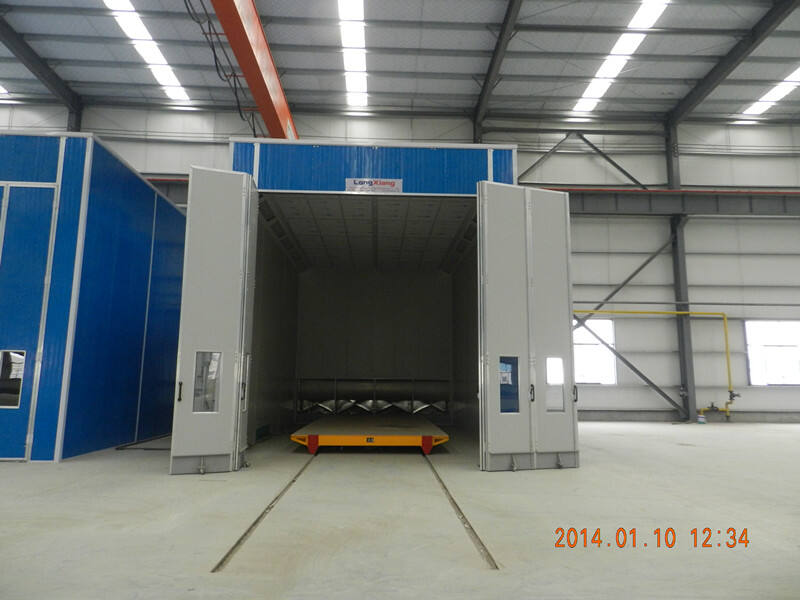
Selecting an energy-efficient industrial paint booth for heavy machinery finishing operations represents a critical decision that directly impacts operational costs, environmental compliance, and long-term profitability. As energy prices continue to rise and sustainability mandates tighten across manufacturing sectors, the design choices made during paint booth specification can mean the difference between a cost-effective finishing system and one that consumes excessive resources throughout its operational life. Heavy machinery coating applications present unique challenges including large part dimensions, extended cure cycles, and substantial heating loads that magnify the importance of energy-optimized booth configurations.

The question of which industrial paint booth design delivers superior energy savings for heavy machinery applications cannot be answered with a single universal solution, as optimal efficiency depends on production volume, part geometry, coating specifications, facility constraints, and regional climate conditions. However, certain design configurations consistently demonstrate measurable advantages in thermal efficiency, airflow optimization, and heat recovery potential. Understanding the energy consumption patterns across different booth architectures enables informed specification decisions that align technical performance with economic objectives while maintaining the coating quality standards required for durable heavy equipment finishes.
Thermal Efficiency Fundamentals in Heavy Machinery Paint Booth Design
Understanding Heat Loss Pathways in Large-Scale Coating Systems
Energy consumption in an industrial paint booth serving heavy machinery applications primarily stems from heating, ventilation, and curing processes, with thermal losses representing the dominant operational expense. Wall construction, ceiling insulation, floor design, and door configurations all contribute to the overall thermal envelope performance. Booths designed for oversized equipment typically feature larger access openings, taller ceiling heights, and greater air volumes compared to standard automotive or general industrial units, which proportionally increases heat loss potential through conduction, convection, and infiltration mechanisms.
The insulation value of booth panels directly correlates with energy retention capacity, with modern sandwich panel construction offering R-values between 15 and 30 depending on core material selection and thickness. Polyurethane foam cores provide superior insulation compared to mineral wool or polystyrene alternatives, reducing conducted heat loss through booth walls by 20 to 35 percent in typical operating conditions. For heavy machinery applications where booth dimensions may exceed 40 feet in length and 16 feet in height, the increased surface area magnifies the cumulative effect of even modest improvements in panel thermal performance.
Airflow Volume Requirements and Their Energy Implications
Ventilation requirements for an industrial paint booth are determined by regulatory standards, coating material characteristics, and the need to maintain proper spray conditions throughout the application process. Heavy machinery booths commonly operate with airflow rates ranging from 100 to 150 linear feet per minute across the work zone, translating to total volumes between 30,000 and 80,000 cubic feet per minute depending on booth cross-sectional area. Each cubic foot of air introduced into the booth must be heated to application temperature, typically between 70 and 80 degrees Fahrenheit during spraying and elevated to 140 to 180 degrees during baking cycles.
The energy required to condition this massive airflow constitutes the primary operational cost driver in booth operation. Reducing unnecessary air volume through optimized booth sizing, implementing variable frequency drives on supply fans to match airflow to actual production needs, and recovering heat from exhaust streams represent the three most effective strategies for controlling ventilation-related energy consumption. Booths designed with adjustable airflow capabilities can reduce heating costs by 30 to 45 percent during low-demand periods compared to constant-volume systems that continuously process maximum design airflow regardless of actual coating activity.
Temperature Management Across Application and Cure Cycles
Heavy machinery coating processes typically involve distinct thermal phases including ambient-temperature preparation, controlled-temperature application, and elevated-temperature curing, each with specific energy demands. The thermal mass of large equipment components creates additional complexity, as substantial energy input is required not only to heat booth air but also to raise workpiece temperature to cure specifications. A 5,000-pound steel fabrication may require 60 to 90 minutes of exposure to 160-degree air to achieve sufficient substrate temperature for proper coating polymerization.
Booth designs that minimize the air volume requiring heating while ensuring uniform temperature distribution across the workpiece deliver measurable efficiency advantages. Configurations that incorporate supplemental radiant heating panels or targeted infrared zones can reduce cure times by 25 to 40 percent compared to convection-only systems, correspondingly decreasing total energy input per finished part. The selection between batch processing in a single large booth versus sequential processing through dedicated spray and cure chambers fundamentally alters the energy profile and should be evaluated based on production patterns and part mix characteristics specific to each manufacturing operation.
Comparative Energy Performance of Common Industrial Paint Booth Configurations
Crossdraft Booth Designs for Heavy Equipment Applications
Crossdraft industrial paint booth configurations feature horizontal airflow from supply plenums on one wall to exhaust chambers on the opposite wall, creating a lateral air pattern across the work zone. This design offers the advantage of lower initial construction costs and simpler installation compared to downdraft alternatives, making crossdraft booths popular for budget-conscious heavy machinery operations. The horizontal airflow pattern effectively removes overspray from the operator breathing zone and prevents coating particles from settling on freshly painted surfaces during application.
However, crossdraft designs typically demonstrate higher energy consumption than vertical airflow configurations because the entire booth height must be supplied with conditioned air, including the substantial volume above the workpiece. For a booth designed to accommodate equipment 12 feet tall, a 16-foot ceiling height means approximately 25 percent of the heated air volume never contacts the work surface. This inefficiency becomes more pronounced as booth dimensions increase to handle larger machinery. Additionally, crossdraft patterns can create uneven temperature distribution, with the supply wall side running warmer than the exhaust side, potentially extending cure times and increasing total energy input per coating cycle.
Downdraft and Semi-Downdraft Configurations
Downdraft industrial paint booth designs deliver supply air through a full ceiling plenum and exhaust through floor-level pits or trenches, establishing a vertical downward airflow that provides superior coating quality and more efficient thermal distribution. The downward air pattern sweeps overspray and volatile organic compounds directly away from the work surface and operator position, improving finish quality and reducing the volume of air requiring replacement ventilation. For heavy machinery applications, downdraft booths typically demonstrate 15 to 25 percent lower heating energy consumption compared to equivalently sized crossdraft units because the airflow path more directly engages the workpiece.
Semi-downdraft configurations represent a practical compromise, supplying air through the ceiling while exhausting through rear wall plenums positioned at mid-height or floor level. This design eliminates the need for expensive floor pit construction while retaining much of the thermal efficiency advantage of full downdraft systems. The diagonal airflow pattern from ceiling supply to rear wall exhaust creates effective overspray capture while directing heated air across workpiece surfaces before exhausting. For retrofit applications or facilities with structural limitations preventing floor excavation, semi-downdraft designs offer energy performance approaching full downdraft systems at significantly reduced installation cost.
Side-Downdraft and Modified Flow Patterns
Side-downdraft industrial paint booth configurations feature ceiling supply air distributed toward one side of the booth with exhaust trenches running along the opposite side at floor level, creating an angled downward flow pattern. This design suits facilities with uneven floor conditions or existing foundations that complicate traditional center-pit exhaust installation. The asymmetric airflow pattern provides adequate overspray control for most heavy machinery coating applications while offering installation flexibility not available with conventional downdraft layouts.
Energy performance of side-downdraft systems falls between crossdraft and full downdraft configurations, typically consuming 8 to 15 percent less heating energy than crossdraft booths of equivalent size while remaining 5 to 10 percent less efficient than center-downdraft designs. The angled flow path creates some dead air zones on the exhaust side that may require supplemental air movement, and temperature uniformity across the work zone may be slightly compromised compared to symmetrical downdraft patterns. Nevertheless, for operations where installation constraints preclude ideal downdraft construction, side-downdraft systems deliver meaningful efficiency improvements over basic crossdraft alternatives while maintaining acceptable coating quality standards.
Advanced Energy Recovery and Thermal Management Technologies
Heat Recovery Systems and Thermal Wheel Integration
Heat recovery represents the single most impactful technology for reducing energy consumption in high-volume industrial paint booth operations serving heavy machinery markets. Air-to-air heat exchangers capture thermal energy from exhaust streams and transfer it to incoming fresh air, preheating supply air and reducing burner firing requirements. Modern thermal wheel systems can achieve heat recovery efficiencies between 70 and 85 percent, dramatically reducing heating costs in cold-climate facilities where incoming air may enter at temperatures 50 to 70 degrees below booth operating temperature.
A properly sized heat recovery system on an industrial paint booth processing heavy machinery can reduce annual heating costs by 50 to 65 percent compared to direct-fired heating without recovery, with payback periods typically ranging from 18 to 36 months depending on facility operating hours and regional energy costs. The investment in heat recovery technology becomes increasingly compelling as booth size and airflow volumes increase, because the absolute energy savings scale proportionally with system capacity. For operations running multiple shifts or maintaining extended cure cycles, heat recovery integration should be considered essential rather than optional equipment.
Regenerative Thermal Oxidizer Coupling
Facilities subject to strict volatile organic compound emission regulations may be required to install thermal oxidizers that combust exhaust air to destroy paint solvents before atmospheric release. Regenerative thermal oxidizers operate at temperatures between 1,400 and 1,600 degrees Fahrenheit and can achieve destruction efficiencies exceeding 99 percent for most coating-related VOCs. The substantial thermal energy within oxidizer exhaust streams presents an opportunity for productive reuse through heat recovery integration with booth supply air systems.
Coupling an industrial paint booth to a regenerative thermal oxidizer with integrated heat recovery can reduce net facility heating costs by 40 to 55 percent compared to separate unintegrated systems, while simultaneously achieving environmental compliance objectives. The oxidizer's thermal output helps maintain booth operating temperature during spray cycles and provides supplemental heat during low-demand periods. This integration approach proves particularly advantageous for heavy machinery operations using solvent-based coatings that generate significant VOC loads requiring abatement, transforming a compliance necessity into an energy asset that contributes to overall system efficiency.
Variable Frequency Drive Implementation and Smart Controls
Traditional industrial paint booth designs operate supply and exhaust fans at constant speeds regardless of actual production requirements, continuously processing design airflow volumes even during setup, masking, and idle periods when full ventilation capacity remains unnecessary. Variable frequency drives enable dynamic fan speed adjustment based on actual booth conditions, reducing airflow and corresponding heating requirements during non-spray periods while maintaining proper ventilation during active coating operations.
Implementing VFD controls on booth fans typically reduces annual energy consumption by 25 to 40 percent compared to constant-speed operation, with minimal capital investment and straightforward retrofit installation on existing equipment. Advanced control systems integrate temperature sensors, occupancy detection, spray gun activation signals, and cure cycle timers to optimize airflow and heating in real time based on actual process requirements. For heavy machinery applications with irregular production schedules or significant non-productive time between coating cycles, intelligent airflow management delivers substantial operational savings while maintaining worker safety and coating quality standards throughout all operating modes.
Design Selection Criteria Based on Production Patterns and Facility Context
Batch Processing Versus Continuous Flow Operations
The fundamental production pattern employed in heavy machinery finishing operations significantly influences optimal industrial paint booth design selection from an energy perspective. Batch processing facilities that coat individual large components or assembled units on intermittent schedules benefit most from highly insulated booth designs with heat recovery systems and intelligent controls that minimize energy consumption during idle periods between batches. The ability to quickly achieve and maintain precise temperature control during relatively short active coating periods while efficiently managing thermal retention between cycles maximizes efficiency for this operating pattern.
Conversely, continuous flow operations processing steady streams of heavy equipment components throughout extended production shifts may justify investment in separated spray and cure chambers that optimize each process phase independently. Dedicated spray booths operating at moderate temperatures combined with specialized cure ovens employing concentrated heating in smaller volumes can reduce total energy consumption by 30 to 45 percent compared to combined booth-oven units for high-volume production scenarios. The optimal configuration depends on careful analysis of actual production volumes, part sizes, coating specifications, and facility operating schedules to match equipment capabilities with real-world utilization patterns.
Climate Considerations and Regional Energy Cost Factors
Geographic location and local climate conditions fundamentally alter the energy profile and optimal design configuration for an industrial paint booth serving heavy machinery applications. Facilities in cold northern climates face heating loads that may represent 70 to 85 percent of total booth operating costs, making investment in superior insulation, heat recovery systems, and thermal management technologies highly economical. The extended heating season and large temperature differential between outdoor ambient and booth operating conditions create compelling economics for efficiency-focused design approaches in these regions.
Southern facilities in warm climates shift energy priorities toward cooling and dehumidification, particularly during summer months when incoming air may exceed 90 degrees with elevated humidity levels that interfere with proper coating application and cure. Booth designs for hot-climate installations should emphasize efficient cooling systems, humidity control capabilities, and potentially downsized heating equipment compared to northern specifications. Regional electricity costs, natural gas availability and pricing, and potential renewable energy integration all influence the lifecycle cost-effectiveness of various design alternatives and should inform specification decisions alongside technical performance criteria.
Coating Material Compatibility and Process Requirements
The specific coating materials and application processes employed in heavy machinery finishing operations impose requirements that may favor certain industrial paint booth configurations over alternatives from an energy efficiency perspective. High-solids and waterborne coatings generally require more precise temperature and humidity control compared to conventional solvent systems, potentially justifying investment in advanced environmental control systems that maintain tighter operating parameters. Powder coating processes eliminate liquid overspray concerns but demand specialized cure ovens with precise thermal uniformity to achieve proper flow and polymerization across complex heavy equipment geometries.
Two-component catalyzed coatings commonly specified for heavy machinery durability may require extended flash-off periods between coating layers, during which booth temperature and airflow can be reduced to conserve energy while maintaining proper curing conditions. Understanding the complete coating system requirements including surface preparation, primer application, intermediate coats, and topcoat specifications enables booth design optimization that aligns equipment capabilities with actual process needs, avoiding over-specification that increases capital costs and energy consumption without corresponding quality or productivity benefits.
FAQ
What is the typical energy cost difference between a well-designed and poorly designed industrial paint booth for heavy machinery?
The annual energy cost difference between an optimally designed industrial paint booth and a poorly configured system for heavy machinery applications typically ranges from 40 to 60 percent of total operating expenses, translating to $30,000 to $80,000 in annual savings for a facility operating 4,000 to 6,000 hours per year depending on booth size, regional energy costs, and production intensity. Key design factors including insulation quality, airflow configuration, heat recovery integration, and control system sophistication collectively determine actual energy performance, with well-engineered systems demonstrating payback periods of 2 to 4 years through operational savings alone when compared to basic booth configurations lacking efficiency optimization features.
How does booth size impact the relative energy efficiency of different design configurations?
Booth size fundamentally alters the energy performance relationship between different industrial paint booth configurations because thermal losses, airflow volumes, and heating loads scale non-linearly with booth dimensions. Smaller booths under 20 feet in length show relatively modest performance differences between crossdraft and downdraft designs, typically 10 to 15 percent energy variance, while large heavy machinery booths exceeding 40 feet demonstrate 25 to 35 percent energy consumption differences favoring downdraft configurations due to more efficient airflow utilization and improved thermal distribution across the expanded work zone. The economic justification for advanced features including heat recovery systems, sophisticated controls, and premium insulation strengthens substantially as booth dimensions increase because absolute energy savings grow proportionally with system capacity while incremental technology costs increase at slower rates.
Can an existing crossdraft industrial paint booth be retrofitted to improve energy efficiency without complete replacement?
Existing crossdraft industrial paint booth installations serving heavy machinery operations can be significantly improved through targeted retrofits that enhance energy performance without requiring complete system replacement, with achievable energy savings typically ranging from 25 to 45 percent depending on current equipment condition and retrofit scope. Practical improvement measures include adding supplemental insulation to booth walls and ceiling, installing variable frequency drives on existing fan motors, integrating programmable control systems with occupancy sensors and automated setback modes, adding air-to-air heat exchangers to recover exhaust thermal energy, sealing air leaks around doors and panel joints, and upgrading burners to high-efficiency condensing units that extract additional heat from combustion products. The optimal retrofit strategy depends on careful energy audit assessment to identify the largest loss pathways and prioritize improvements offering the best return on investment for the specific facility operating conditions and production patterns.
What role does booth door design play in overall energy efficiency for heavy machinery applications?
Door design represents a critical but frequently overlooked factor in industrial paint booth energy performance for heavy machinery applications, as large access openings necessary to accommodate oversized equipment create substantial thermal loss pathways during door operation and potential air infiltration during closed periods. High-performance door systems featuring insulated panels with R-values matching booth wall construction, positive sealing mechanisms with compressible gaskets, rapid-acting operation to minimize open duration, and potentially vestibule or airlock configurations for extremely large openings can reduce door-related heat loss by 50 to 70 percent compared to basic uninsulated designs. For booths requiring frequent part loading and unloading, door-related losses may represent 15 to 25 percent of total energy consumption, making door specification an important consideration in overall system efficiency optimization alongside airflow design and heating equipment selection.
Table of Contents
- Thermal Efficiency Fundamentals in Heavy Machinery Paint Booth Design
- Comparative Energy Performance of Common Industrial Paint Booth Configurations
- Advanced Energy Recovery and Thermal Management Technologies
- Design Selection Criteria Based on Production Patterns and Facility Context
-
FAQ
- What is the typical energy cost difference between a well-designed and poorly designed industrial paint booth for heavy machinery?
- How does booth size impact the relative energy efficiency of different design configurations?
- Can an existing crossdraft industrial paint booth be retrofitted to improve energy efficiency without complete replacement?
- What role does booth door design play in overall energy efficiency for heavy machinery applications?