
 EN
EN
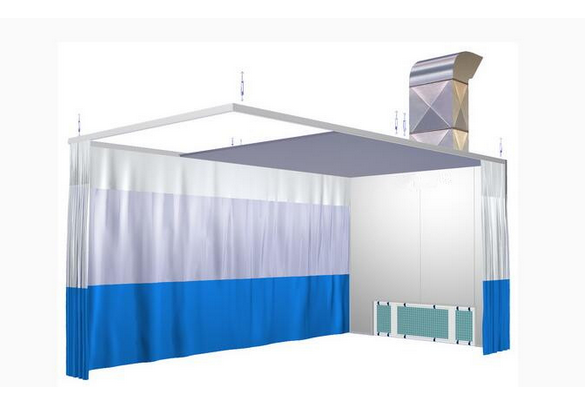
Selecting the appropriate industrial paint booth size is a critical decision that directly impacts your manufacturing facility's efficiency, quality output, and operational costs. The right sizing ensures optimal airflow patterns, maintains consistent temperature control, and provides adequate workspace for your specific coating applications. Manufacturing facilities often underestimate the complexity involved in determining the ideal booth dimensions, leading to costly modifications or suboptimal performance down the line.
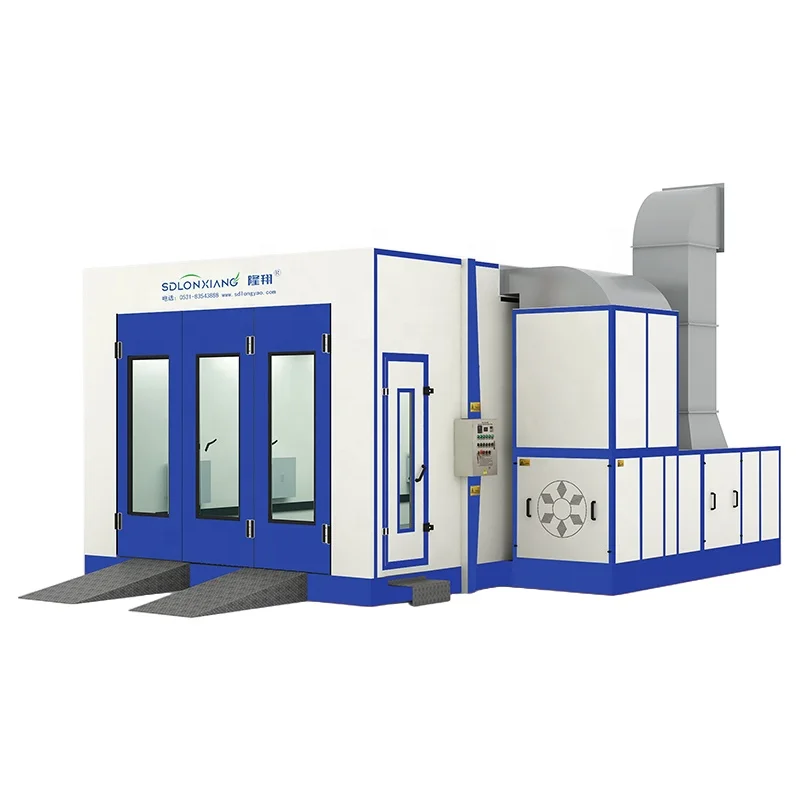
The sizing process involves evaluating multiple factors including product dimensions, production volume, ventilation requirements, and future growth projections. A properly sized booth not only accommodates your current needs but also provides flexibility for expanding operations or handling larger components. Understanding these fundamentals will help you make an informed investment that delivers long-term value and operational excellence.
Understanding Industrial Paint Booth Dimensions and Classifications
Standard Size Categories and Applications
Industrial paint booths are typically categorized into several standard size ranges, each designed for specific applications and production requirements. Small booths, measuring 8x12x8 feet, are ideal for automotive parts, small machinery components, and precision instruments. These compact units offer excellent control over environmental conditions while maintaining cost-effectiveness for lower volume operations.
Medium-sized booths range from 14x24x10 feet to 20x40x12 feet, accommodating larger automotive panels, furniture pieces, and medium-scale industrial equipment. These configurations provide the versatility needed for facilities handling diverse product lines while maintaining efficient airflow distribution. The increased ceiling height in these booths allows for better spray gun manipulation and reduces overspray settling on freshly coated surfaces.
Large industrial paint booth installations can exceed 40x60x16 feet, designed for heavy machinery, aircraft components, and large-scale manufacturing operations. These substantial enclosures require sophisticated ventilation systems and precise environmental controls to maintain consistent conditions throughout the workspace. The investment in larger booths typically pays dividends through increased production capacity and improved coating quality consistency.
Custom Sizing Considerations
Many manufacturing facilities require custom booth dimensions to accommodate unique product geometries or existing facility constraints. Custom sizing involves careful analysis of clearance requirements, allowing sufficient space around the workpiece for operator movement and equipment positioning. The general rule suggests maintaining at least 3-4 feet of clearance on all sides of the largest workpiece to ensure optimal spray coverage and safety compliance.
Height considerations are equally important, particularly for tall components or when using overhead conveyor systems. The booth ceiling should provide adequate clearance for lifting equipment, spray gun extensions, and proper air circulation patterns. Insufficient height can create dead air zones, leading to contamination issues and inconsistent coating application. Professional booth designers typically recommend ceiling heights that exceed the tallest workpiece by at least 4-6 feet.
Analyzing Production Requirements and Workflow
Volume-Based Sizing Calculations
Production volume directly influences the optimal booth size selection, as higher throughput requirements demand larger working spaces and more efficient material handling systems. Calculate your daily, weekly, and monthly production targets, considering both current needs and projected growth over the next 3-5 years. This forward-thinking approach prevents the need for costly booth expansions or replacements as your business scales.
Cycle time analysis plays a crucial role in determining booth capacity requirements. Consider the complete coating process, including preparation time, application duration, flash-off periods, and curing cycles. A booth that accommodates multiple workpieces simultaneously can significantly improve throughput, but requires careful planning to maintain air quality and prevent cross-contamination between different coating materials.
Peak production scenarios should also factor into your sizing decisions, ensuring the booth can handle maximum capacity periods without compromising quality or safety standards. Many facilities experience seasonal fluctuations or special order demands that temporarily increase production requirements. Sizing your booth to handle these peak periods prevents bottlenecks and maintains customer satisfaction during high-demand periods.
Workflow Optimization and Space Utilization
Efficient workflow design within the booth space maximizes productivity while maintaining safe working conditions. Consider the movement patterns of operators, material handling equipment, and finished goods throughout the coating process. A well-designed booth layout minimizes unnecessary movement, reduces contamination risks, and improves overall cycle times.
Material staging areas within or adjacent to the booth require adequate space allocation to support continuous production flow. Raw materials, coating supplies, and finished goods all require designated storage areas that don't interfere with the primary coating operations. The booth size should accommodate these supporting functions while maintaining the required environmental controls and safety clearances.
Environmental and Safety Compliance Factors
Ventilation and Airflow Requirements
Proper ventilation sizing is directly proportional to booth dimensions, with larger spaces requiring proportionally more air movement to maintain safe working conditions and optimal coating quality. The National Institute for Occupational Safety and Health (NIOSH) provides specific guidelines for air velocity requirements, typically ranging from 100-150 feet per minute for cross-draft booths and 50-100 feet per minute for downdraft configurations.
Air distribution uniformity becomes increasingly challenging as booth size increases, requiring sophisticated plenum designs and filter arrangements to ensure consistent airflow patterns. Poor air distribution can create turbulence zones, leading to overspray accumulation and contamination issues. Professional ventilation engineers use computational fluid dynamics modeling to optimize airflow patterns for specific booth geometries and applications.
Energy consumption considerations significantly impact operational costs, particularly for larger booth installations. The power required for fans, heating systems, and air treatment equipment scales exponentially with booth size. Implementing energy-efficient technologies such as variable frequency drives, heat recovery systems, and advanced filtration can offset some of these increased operational expenses.
Fire Safety and Code Compliance
Fire safety requirements vary based on booth size, with larger installations subject to more stringent regulations and safety system requirements. The National Fire Protection Association (NFPA) codes specify minimum safety equipment, evacuation procedures, and suppression system designs based on booth volume and coating materials used. Larger booths typically require more sophisticated fire suppression systems, multiple exit points, and enhanced emergency lighting systems.
Explosion prevention measures become increasingly critical as booth size increases, requiring careful consideration of electrical equipment classification, static electricity control, and ventilation adequacy. The larger air volumes in oversized booths can potentially accumulate higher concentrations of flammable vapors if ventilation systems are improperly designed or maintained. Regular safety audits and compliance verification are essential for larger installations.
Cost Analysis and Return on Investment
Initial Investment Considerations
The relationship between booth size and initial cost is not strictly linear, as certain fixed expenses such as control systems, safety equipment, and installation labor represent a smaller percentage of total cost in larger installations. However, structural requirements, ventilation equipment, and site preparation costs increase significantly with booth size. A comprehensive cost analysis should include not only the booth purchase price but also installation, utilities, permits, and any facility modifications required.
Financing options and depreciation schedules vary based on equipment value and expected service life, with larger booth investments potentially qualifying for more favorable terms or tax incentives. Many manufacturers offer leasing programs or staged installation options that can help manage cash flow while still achieving the desired booth capacity. Consider the total cost of ownership over the booth's expected 15-20 year service life when evaluating different sizing options.
Operational Cost Implications
Ongoing operational expenses scale significantly with booth size, particularly utility costs for heating, ventilation, and air conditioning systems. A booth twice the size may require three times the energy consumption due to increased air volume requirements and heat losses through larger surface areas. Energy-efficient design features and operational practices can help mitigate these increased costs while maintaining the benefits of larger working spaces.
Labor efficiency improvements from properly sized booths often offset increased operational costs through reduced handling time, improved ergonomics, and enhanced quality consistency. Workers in cramped conditions experience higher fatigue rates and are more prone to application errors, leading to increased rework costs and reduced productivity. The optimal booth size balances operational expenses with productivity improvements to maximize overall profitability.
Technology Integration and Future Adaptability
Automation and Equipment Integration
Modern industrial coating operations increasingly incorporate automated spray systems, robotic applicators, and conveyor systems that require specific spatial arrangements and clearances. The booth size must accommodate not only current manual operations but also potential future automation upgrades. Robotic spray systems typically require programming envelopes that extend beyond the workpiece dimensions, necessitating larger booth spaces for effective implementation.
Utility requirements for automated systems include compressed air, electrical power, and data communications infrastructure that must be integrated into the booth design. Larger booths provide more flexibility for routing utilities and positioning equipment without interfering with production operations. Consider conduit runs, air drops, and electrical panel locations during the initial sizing phase to prevent costly modifications during automation upgrades.
Flexibility for Product Changes
Manufacturing facilities often experience product mix evolution over time, requiring booth configurations that can adapt to different coating requirements and workpiece geometries. A moderately oversized booth provides valuable flexibility for handling unexpected orders, new product lines, or seasonal variations in production requirements. This adaptability can provide competitive advantages by enabling rapid response to market opportunities without major facility modifications.
Modular booth designs allow for future expansion or reconfiguration as business needs evolve, providing a cost-effective approach to growth management. Some manufacturers offer booth systems that can be extended or modified with minimal disruption to ongoing operations. This scalability option may justify selecting a smaller initial booth size with planned expansion capabilities rather than investing in maximum capacity from the start.
FAQ
What is the minimum clearance required around workpieces in an industrial paint booth
The recommended minimum clearance is 3-4 feet on all sides of the largest workpiece to ensure proper spray coverage and operator safety. This clearance allows for adequate air circulation, reduces contamination risks, and provides sufficient space for spray gun manipulation. Larger or more complex workpieces may require additional clearance to maintain optimal coating quality and comply with safety regulations.
How does booth size affect ventilation requirements and energy costs
Ventilation requirements scale with booth volume, typically requiring 100-150 feet per minute air velocity for cross-draft designs. Energy costs increase exponentially with size due to larger air volumes requiring heating, cooling, and filtration. A booth twice the size may consume three times the energy due to increased surface area heat losses and air movement requirements. Proper insulation and energy recovery systems can help minimize these operational expenses.
Can I start with a smaller booth and expand it later
Many booth manufacturers offer modular designs that allow for future expansion, but this depends on the initial booth construction and foundation preparation. Expandable booths typically cost 10-15% more initially but provide valuable flexibility for growing operations. Consider utility routing, foundation sizing, and permit requirements when planning for future expansion to minimize modification costs and downtime.
What factors determine whether I need a custom-sized booth versus standard dimensions
Custom sizing becomes necessary when standard booth dimensions cannot accommodate your largest workpieces with adequate clearance, when existing facility constraints limit installation options, or when unique production requirements demand specialized configurations. Custom booths typically cost 20-30% more than standard sizes but may be the only viable option for specific applications. Evaluate your product mix, facility layout, and growth projections to determine if custom sizing is justified.