
 EN
EN
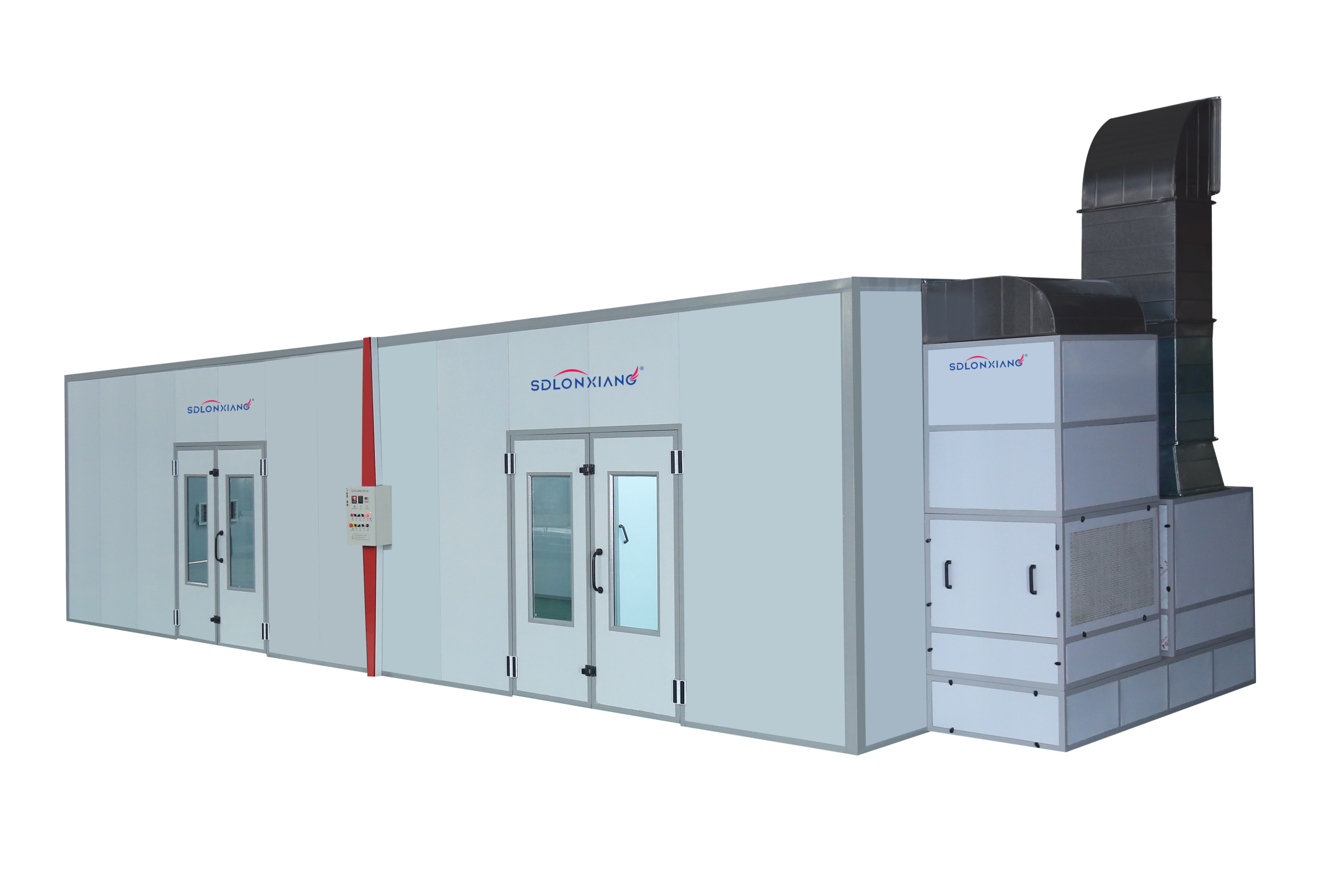
The furniture finishing industry has long relied on fixed spray booth installations to achieve professional-grade results, but the emergence of portable spraybooths for furniture finishing has challenged conventional assumptions about quality and performance. Many furniture manufacturers, refinishing shops, and custom woodworking operations now face a critical decision: can these mobile solutions truly deliver the same finishing quality as permanent installations? This question carries significant implications for operational flexibility, capital investment, and production standards across the furniture manufacturing sector.

The answer depends on multiple technical factors including airflow engineering, filtration systems, environmental control, and construction quality. Modern portable spraybooths for furniture finishing have evolved considerably from their early iterations, incorporating advanced technologies that were once exclusive to fixed installations. Understanding the engineering principles, performance metrics, and application-specific requirements enables furniture finishing operations to make informed decisions about whether portable solutions can meet their quality standards without compromising finish consistency, safety compliance, or production efficiency.
Engineering Foundations That Determine Finishing Quality
Airflow Dynamics and Contamination Control
The fundamental determinant of finishing quality in any spray booth, whether portable or fixed, lies in its airflow management system. High-quality portable spraybooths for furniture finishing employ engineered airflow patterns that create laminar flow conditions, moving air uniformly from the intake filters through the work zone and toward exhaust filtration. This controlled movement prevents turbulence that causes overspray to settle on wet surfaces, ensuring consistent finish application across furniture pieces of varying geometries.
Fixed booths typically achieve airflow velocities between 80 and 120 feet per minute for furniture finishing applications, creating optimal conditions for solvent-based and water-based coatings alike. Advanced portable spraybooths for furniture finishing now match these specifications through properly sized fan systems and strategically designed plenum chambers. The key difference lies not in the achievable airflow velocity but in how consistently the system maintains these conditions across different operating environments and external weather conditions.
Contamination control extends beyond basic airflow to include multi-stage filtration that removes particulates before they reach the finishing zone. Professional-grade portable spraybooths for furniture finishing incorporate intake filtration rated at 98% efficiency for particles down to 10 microns, comparable to fixed booth standards. The critical factor becomes filter surface area relative to airflow volume, as insufficient filter capacity creates pressure drops that compromise both airflow consistency and energy efficiency throughout extended production runs.
Temperature and Humidity Management Systems
Environmental control represents another crucial factor in achieving consistent finishing quality. Fixed spray booths commonly integrate sophisticated heating and cooling systems that maintain precise temperature ranges regardless of ambient conditions. Many operations assume that portable spraybooths for furniture finishing cannot replicate this level of control, but modern designs increasingly incorporate heating elements, temperature monitoring, and insulated construction that narrows the performance gap significantly.
Temperature stability affects coating viscosity, flash-off rates, and cure chemistry across all furniture finishing processes. Premium portable spraybooths for furniture finishing feature heating systems capable of maintaining temperatures between 60 and 80 degrees Fahrenheit, the optimal range for most furniture coatings. These systems employ electric heating elements integrated into the airflow path, ensuring even heat distribution throughout the spray zone without creating hot spots that could affect finish flow and leveling characteristics.
Humidity management poses greater challenges for portable systems compared to climate-controlled fixed installations. However, portable spraybooths for furniture finishing operating in temperature-controlled production facilities can achieve acceptable humidity stability by drawing intake air from the conditioned space. Operations in unconditioned environments may require supplemental dehumidification during high-humidity seasons, but this limitation affects smaller fixed booths similarly, making it less of a differentiating factor than commonly assumed.
Structural Integrity and Light Quality
The structural design of spray enclosures directly influences finishing quality through light distribution and surface inspection capabilities. Fixed booths typically feature rigid panel construction with integrated lighting systems positioned to eliminate shadows and reveal surface defects during application. Modern portable spraybooths for furniture finishing have adopted similar lighting configurations, incorporating LED arrays that provide 1000-plus lux illumination at work surface level with color rendering indices above 85.
Light positioning matters as much as intensity in furniture finishing applications. Quality portable spraybooths for furniture finishing place lighting fixtures outside the primary airflow path to prevent heat generation within the spray zone while maintaining even illumination across horizontal and vertical work surfaces. This design approach, once exclusive to permanent installations, now appears in premium portable systems that prioritize finish quality over mere containment.
Structural stability affects quality outcomes when vibration or flex in booth panels disrupts airflow patterns or creates gaps that allow unfiltered air infiltration. High-performance portable spraybooths for furniture finishing employ reinforced framework designs and secure panel attachment systems that minimize movement during fan operation. While fixed booths inherently provide superior rigidity, well-engineered portable systems achieve sufficient structural stability for professional furniture finishing when properly assembled and anchored to floor surfaces.
Performance Factors in Real Production Environments
Consistency Across Production Volumes
The ability to maintain quality standards throughout extended production runs separates professional finishing systems from basic containment solutions. Fixed spray booths demonstrate proven consistency over years of continuous operation, but portable spraybooths for furniture finishing must prove they can deliver comparable reliability across varying workloads and production schedules. This consistency depends on component durability, maintenance accessibility, and system design margins that prevent performance degradation under sustained use.
Motor and fan assemblies represent the mechanical heart of any spray booth system. Industrial-grade portable spraybooths for furniture finishing specify continuous-duty motors rated for extended operation rather than intermittent-use components found in entry-level systems. These motors maintain consistent airflow velocities even as filters accumulate loading, ensuring that finishing conditions remain stable from the first piece to the hundredth in a production batch.
Filter replacement intervals directly impact operational consistency and quality maintenance. Professional portable spraybooths for furniture finishing employ easily accessible filter banks that facilitate regular maintenance without production disruptions. Systems designed with proper filter surface area relative to airflow volume extend replacement intervals while maintaining capture efficiency, reducing the quality variability that can occur when operators delay filter changes due to difficult access or high replacement costs.
Adaptation to Different Furniture Finishing Processes
Furniture finishing encompasses diverse coating systems including lacquers, conversion varnishes, catalyzed polyurethanes, water-based acrylics, and specialty finishes like glazes and distressing techniques. Each coating type presents distinct requirements for airflow velocity, temperature control, and flash-off conditions. Versatile portable spraybooths for furniture finishing accommodate this process diversity through adjustable airflow settings, supplemental heating options, and modular configurations that adapt to different piece sizes and production methods.
Solvent-based finishing systems require robust exhaust capacity to maintain safe vapor concentrations while providing adequate flash-off time before pieces exit the booth. Quality portable spraybooths for furniture finishing calculate exhaust volume based on coating solvent content and application rates, ensuring compliance with occupational exposure limits and fire safety codes. These calculations must account for worst-case scenarios including high-volume application of fast-evaporating lacquers that generate peak vapor loads within confined spray zones.
Water-based coatings present different challenges centered on temperature maintenance and extended drying requirements. Portable spraybooths for furniture finishing handling water-based systems benefit from integrated heating that accelerates water evaporation without creating surface defects like blushing or flow marks. The heating capacity required typically ranges from 15,000 to 30,000 BTU depending on booth volume and ambient conditions, specifications that premium portable systems increasingly provide to match fixed booth capabilities.
Quality Verification and Inspection Integration
Achieving consistent finish quality requires not only proper application conditions but also effective quality verification during and after coating application. Fixed spray booths often incorporate dedicated inspection zones with specialized lighting for defect detection. Advanced portable spraybooths for furniture finishing integrate similar inspection capabilities through multi-position lighting controls and work zones configured for both application and immediate post-spray evaluation before pieces cure.
Surface defect detection depends heavily on lighting angle and intensity during the critical window between application and initial cure. Professional portable spraybooths for furniture finishing provide adjustable lighting positions or multiple light banks that reveal runs, sags, orange peel, and contamination during this inspection window. This capability proves particularly valuable for high-end furniture finishing where defect detection before cure saves significant rework costs and maintains production schedules.
Documentation and quality tracking increasingly factor into furniture finishing operations serving commercial and institutional markets. While not directly related to booth type, portable spraybooths for furniture finishing that integrate with production tracking systems enable operators to record process parameters, environmental conditions, and quality outcomes for each batch. This data collection supports continuous improvement initiatives and provides evidence of process control for customers requiring quality documentation.
Economic and Operational Considerations Beyond Quality Parity
Capital Investment and Financial Flexibility
The quality comparison between portable and fixed spray booths cannot ignore the substantial cost differences that influence purchasing decisions. Fixed installation booths for furniture finishing typically require investments ranging from thirty thousand to over one hundred thousand dollars when including foundation preparation, utility connections, permitting, and installation labor. These capital requirements place permanent booths beyond reach for many smaller furniture operations and custom finishing shops.
High-quality portable spraybooths for furniture finishing capable of matching fixed booth performance typically cost between one-third and one-half the price of comparable permanent installations. This cost advantage stems from standardized manufacturing, simplified installation requirements, and elimination of site-specific engineering and construction. For operations where finishing quality matters but capital availability limits equipment investment, premium portable systems provide access to professional-grade capabilities that would otherwise remain unavailable.
Depreciation treatment and asset flexibility also factor into the economic equation. Portable spraybooths for furniture finishing qualify as equipment rather than building improvements in most jurisdictions, enabling faster depreciation schedules and simpler relocation if production facilities change. This financial flexibility particularly benefits contract finishers, restoration specialists, and growing operations that may outgrow current facilities before recouping fixed booth investments.
Space Utilization and Production Flexibility
Fixed spray booths consume dedicated floor space that remains committed to finishing operations regardless of production schedules or seasonal demand fluctuations. Many furniture manufacturers experience variable finishing volumes based on order patterns, product mix changes, or seasonal business cycles. Portable spraybooths for furniture finishing address this variability through relocatable designs that allow space reallocation when finishing demands decrease or different production activities require priority access to floor space.
The footprint efficiency of portable systems also enables quality finishing capabilities in facilities where space constraints prohibit fixed booth installation. Custom furniture shops, restoration operations, and specialty finishers often occupy facilities where available floor space limits finishing capacity. Compact portable spraybooths for furniture finishing measuring eight by eight feet or ten by twelve feet can fit into spaces too small for permanent installations while still providing professional airflow control and contamination management.
Multi-site operations and mobile finishing services represent another scenario where portable systems deliver quality finishing capabilities that fixed installations cannot match. Furniture restoration companies serving residential and commercial clients increasingly deploy portable spraybooths for furniture finishing to on-site locations, enabling professional finishing quality in customer facilities. This capability creates service differentiation and revenue opportunities that would be impossible with permanent booth infrastructure.
Installation Complexity and Operational Timeline
The time required to bring new finishing capacity online significantly impacts production planning and business responsiveness. Fixed spray booth installations typically require eight to sixteen weeks from order placement through final permitting and commissioning. This timeline includes engineering, manufacturing, site preparation, construction, utility connections, and regulatory approvals. Operations experiencing immediate capacity constraints or urgent quality improvement needs cannot afford these extended implementation periods.
Professional portable spraybooths for furniture finishing ship as complete systems requiring only electrical connection and exhaust ducting to achieve operational status. Experienced crews can assemble and commission portable systems within one to three days, enabling rapid capacity expansion or emergency replacement of failed equipment. This installation speed particularly benefits operations recovering from equipment failures, responding to unexpected order surges, or launching new finishing services without extended lead times.
Permitting requirements vary significantly by jurisdiction but generally favor portable systems over permanent installations. Many municipalities classify portable spraybooths for furniture finishing as equipment rather than construction projects, simplifying or eliminating building permit requirements while maintaining compliance with fire and environmental regulations. This regulatory advantage reduces both the cost and timeline associated with expanding finishing capacity while ensuring operations meet applicable safety and emission standards.
Technical Specifications That Bridge the Quality Gap
Airflow Engineering and Fan System Design
The technical specifications that enable portable spraybooths for furniture finishing to match fixed booth quality center on airflow engineering rather than structural permanence. Modern portable systems employ centrifugal fan designs generating static pressures sufficient to overcome filter resistance and ductwork losses while maintaining target airflow velocities throughout the spray zone. Fan sizing calculations account for booth volume, filter surface area, and exhaust duct length to ensure consistent performance across varying installation configurations.
Variable frequency drive controls increasingly appear in premium portable spraybooths for furniture finishing, enabling operators to adjust airflow velocity for different coating systems and application techniques. This adjustability, once exclusive to sophisticated fixed installations, allows single portable units to optimize performance for both high-transfer-efficiency HVLP application and conventional air-atomized spray guns that require higher exhaust velocities to manage overspray effectively.
Pressure monitoring systems provide real-time indication of filter loading and airflow performance in advanced portable spraybooths for furniture finishing. Magnehelic gauges or digital pressure sensors alert operators when filter replacement becomes necessary before performance degradation affects finishing quality. This monitoring capability transforms maintenance from reactive response to scheduled prevention, ensuring consistent quality outcomes across extended production periods.
Filtration Technology and Efficiency Standards
Multi-stage filtration represents the front line of contamination control in furniture finishing operations. Professional portable spraybooths for furniture finishing employ intake filtration meeting or exceeding MERV 8 standards, capturing 95% of particles 3 microns and larger before air enters the spray zone. This intake filtration protects work surfaces from environmental contamination while extending the service life of more expensive exhaust filters that capture coating overspray.
Exhaust filtration in portable spraybooths for furniture finishing typically employs progressive density media or multi-stage cartridge designs that balance capture efficiency against airflow resistance. Quality systems specify exhaust filters rated to remove 98% or more of coating particles before discharge, meeting environmental regulations while preventing external contamination that could trigger neighbor complaints or regulatory actions. Filter surface area relative to airflow volume determines both capture efficiency and service life, with premium systems providing generous filter sizing that extends replacement intervals and reduces operating costs.
Filter accessibility directly impacts maintenance compliance and sustained quality performance. Well-designed portable spraybooths for furniture finishing position filters for tool-free access and rapid replacement without requiring booth disassembly or production shutdown. This maintenance-friendly design ensures operators actually perform filter changes at recommended intervals rather than delaying maintenance until quality problems emerge. The resulting consistency in airflow and contamination control maintains finishing quality comparable to well-maintained fixed installations.
Construction Materials and Environmental Sealing
The materials and construction methods employed in portable spraybooths for furniture finishing determine both durability and environmental isolation. Premium portable systems utilize powder-coated steel panels or aluminum extrusion frames with high-density polyethylene or polycarbonate panels that resist coating chemical exposure while providing adequate structural rigidity. These materials withstand the harsh chemical environment of furniture finishing operations while maintaining dimensional stability across temperature fluctuations and repeated assembly cycles.
Sealing technology at panel joints and door interfaces critically affects booth performance by preventing unfiltered air infiltration that introduces contamination. Quality portable spraybooths for furniture finishing employ compression seals or interlocking panel designs that create continuous air barriers around the spray zone perimeter. These sealing systems maintain negative pressure differentials that prevent coating vapor escape while ensuring intake air passes through filtration before entering work areas.
Door design represents a frequent weakness in portable spray booth systems where inadequate sealing or poor latching mechanisms compromise environmental isolation. Professional portable spraybooths for furniture finishing specify doors with multi-point latching and continuous gasket seals that prevent air leakage during operation. Large furniture pieces require substantial door openings, making effective sealing more challenging but also more critical to maintaining the controlled environment necessary for consistent finishing quality.
Application Scenarios Where Portable Systems Excel
Custom Furniture and Small Production Environments
Custom furniture makers and small-batch producers represent ideal applications where portable spraybooths for furniture finishing deliver quality outcomes while providing operational advantages that fixed installations cannot match. These operations typically finish diverse piece types with varying dimensions, making the flexibility to reconfigure work areas particularly valuable. A portable booth positioned for dining table finishing can relocate to accommodate a large armoire the following day, maximizing facility utilization impossible with permanent installations.
The scale of investment appropriate for custom furniture operations also favors portable solutions. Shops producing twenty to fifty furniture pieces monthly generate insufficient finishing volume to justify fixed booth costs but require professional finishing quality to compete in premium markets. Quality portable spraybooths for furniture finishing provide these operations with capabilities previously accessible only to larger manufacturers with greater capital resources and production volumes.
Custom finishers frequently work with specialty coatings and techniques including glazes, distressing, multi-tone finishes, and hand-rubbed topcoats. These processes benefit from the visual access and lighting control available in portable spraybooths for furniture finishing that position operators close to work surfaces. The intimacy of smaller portable booths actually advantages detailed finish work compared to large fixed installations where distance from lighting and airflow patterns can complicate intricate techniques.
Restoration and Refinishing Operations
Furniture restoration specialists face unique challenges including piece variability, finish matching requirements, and often-limited facility space. Portable spraybooths for furniture finishing address these challenges through compact footprints, relocatable designs, and professional finishing environments that ensure color accuracy and surface quality match original finishes. Restoration work demands quality outcomes equal to original manufacturing, making booth performance critical to business reputation and customer satisfaction.
The variable workflow typical in restoration operations also suits portable spray booth deployment. Projects arrive unpredictably with widely varying finishing requirements and production schedules. Portable spraybooths for furniture finishing allow restoration shops to configure work areas based on current project demands, allocating space to stripping, repair, and assembly when finishing work diminishes. This operational flexibility maximizes facility utilization while maintaining access to professional finishing capabilities when projects require coating application.
On-site restoration projects particularly benefit from portable spray booth capabilities. High-value antiques, built-in cabinetry, and large architectural elements often cannot be transported to shop facilities for finishing. Portable spraybooths for furniture finishing enable restorers to bring professional finishing environments to project sites, controlling overspray and contamination while achieving quality results indistinguishable from shop-finished work. This capability expands service offerings and addresses client needs that fixed booth infrastructure cannot accommodate.
Educational and Training Facilities
Woodworking schools, vocational programs, and manufacturer training centers require finishing equipment that balances professional capabilities with budget constraints and flexible utilization. Portable spraybooths for furniture finishing serve educational environments by providing students with experience using industry-standard equipment while accommodating the variable schedules and diverse curricula typical in academic settings. The ability to relocate booths between different program areas or reconfigure facilities for special workshops provides operational flexibility that permanent installations cannot match.
Safety compliance in educational settings demands proper ventilation and overspray containment regardless of finishing volume. Portable spraybooths for furniture finishing enable schools to provide compliant finishing environments without the substantial capital investment required for permanent installations. This equipment accessibility ensures finishing education includes hands-on experience rather than purely theoretical instruction, preparing students for workplace realities they will encounter in furniture manufacturing and custom woodworking careers.
The demonstration value of portable spray booths also benefits manufacturer training programs and finishing product education. Coating suppliers and equipment manufacturers deploy portable spraybooths for furniture finishing to training events and dealer demonstrations, providing controlled environments for technique instruction and product comparison. The portability enables training delivery at customer facilities, increasing program accessibility while ensuring consistent environmental conditions across multiple training locations.
FAQ
Do portable spray booths provide adequate airflow velocity for professional furniture finishing?
High-quality portable spraybooths for furniture finishing achieve airflow velocities between 80 and 120 feet per minute, matching the specifications of fixed installations used in professional furniture manufacturing. The key factor is selecting properly engineered systems with adequately sized fans and filtration rather than assuming all portable units deliver equivalent performance. Premium portable booths specify continuous-duty motors and centrifugal fan designs that maintain consistent airflow even as filters accumulate loading throughout production runs. Operations should verify airflow specifications and fan capacity before purchasing to ensure the portable system meets their finishing quality requirements.
Can portable spray booths maintain consistent temperature for water-based furniture coatings?
Advanced portable spraybooths for furniture finishing incorporate electric heating systems capable of maintaining stable temperatures in the 65 to 80 degree range required for water-based coating performance. These heating systems typically provide 15,000 to 30,000 BTU capacity integrated into the airflow path for even heat distribution. While portable systems may require slightly longer warm-up periods compared to fixed booths in cold environments, they maintain adequate temperature stability during production once operating temperature is achieved. Operations in climate-controlled facilities experience minimal temperature variation, while those in unheated spaces should select portable booths with appropriate heating capacity for ambient conditions.
How does contamination control in portable booths compare to permanent installations?
Contamination control depends on filtration efficiency, airflow management, and environmental sealing rather than booth permanence. Professional portable spraybooths for furniture finishing employ multi-stage filtration with intake filters rated at 95% or higher efficiency for particles 3 microns and larger, matching fixed booth standards. The critical factors are proper filter sizing relative to airflow volume, regular filter maintenance, and effective panel sealing to prevent unfiltered air infiltration. Well-designed portable systems achieve contamination control equivalent to fixed installations when properly maintained, with finish quality outcomes indistinguishable between booth types when both are correctly specified and operated.
What furniture finishing processes are unsuitable for portable spray booths?
Portable spraybooths for furniture finishing accommodate nearly all coating systems used in wood furniture production including lacquers, conversion varnishes, polyurethanes, water-based acrylics, and specialty finishes. The limitations relate more to piece size and production volume than coating chemistry. Extremely large furniture assemblies exceeding 10 feet in any dimension may require custom portable booth configurations or fixed installations with greater interior dimensions. Very high production volumes generating continuous finishing operations across multiple shifts may justify fixed booth investment for long-term durability, though premium portable systems with industrial-grade components serve medium-volume production effectively. UV-cured coatings requiring integrated curing equipment typically need specialized fixed installations, though this limitation affects booth design rather than portability specifically.
Table of Contents
- Engineering Foundations That Determine Finishing Quality
- Performance Factors in Real Production Environments
- Economic and Operational Considerations Beyond Quality Parity
- Technical Specifications That Bridge the Quality Gap
- Application Scenarios Where Portable Systems Excel
-
FAQ
- Do portable spray booths provide adequate airflow velocity for professional furniture finishing?
- Can portable spray booths maintain consistent temperature for water-based furniture coatings?
- How does contamination control in portable booths compare to permanent installations?
- What furniture finishing processes are unsuitable for portable spray booths?